The People in My Neighborhood

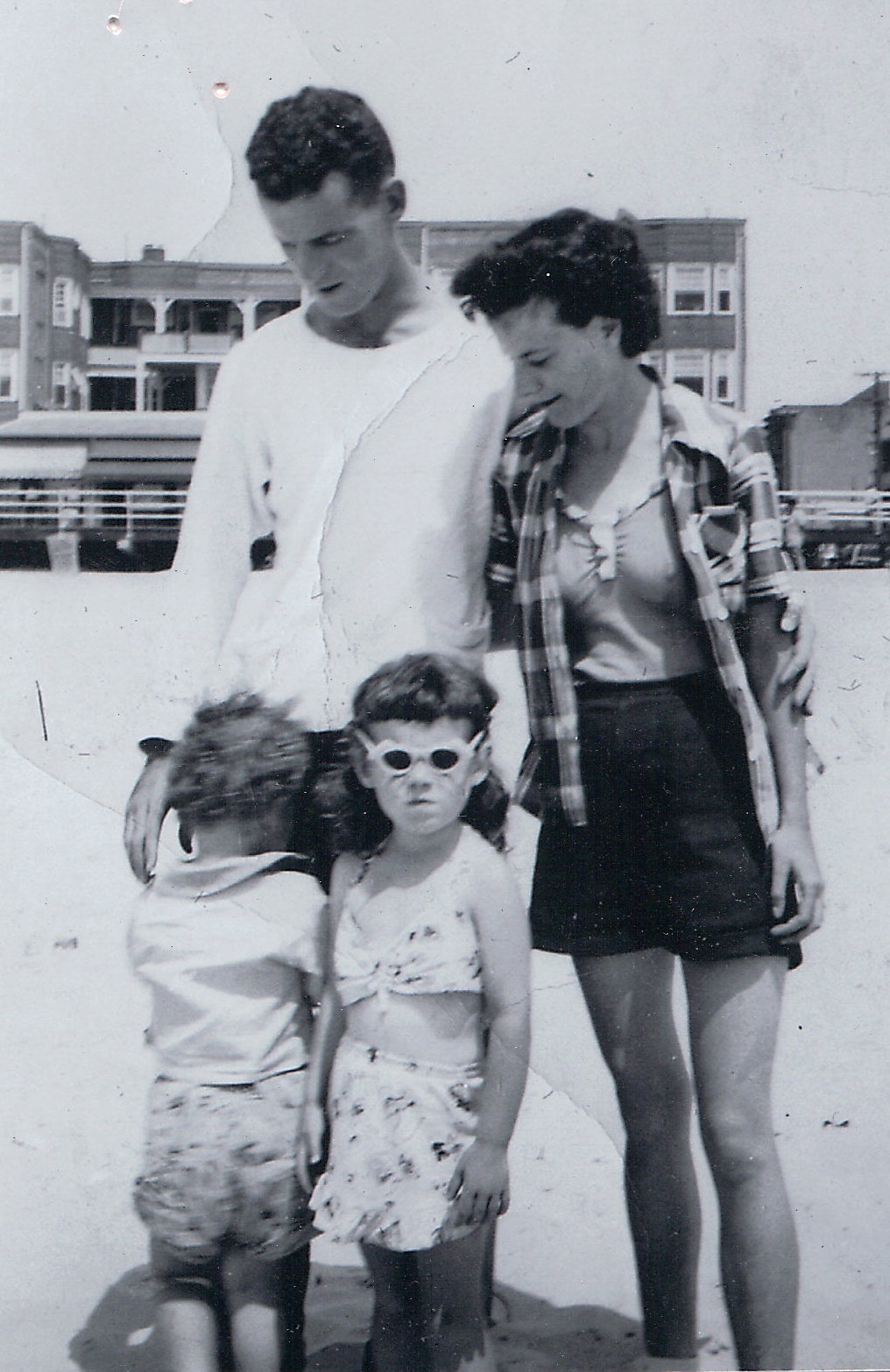
Lost and found: family photo that washed up after  the storm
Lost and found: family photo that washed up after the storm

When all is said and done, Hurricane Sandy will have redefined much of the East Coast as well as the experience of coastal living. Just ask the 500 displaced families in my town what “Life’s a Beach” means to them now. Like the amusement rides washing up towns away from their home piers or family photos surfacing in streets, many find themselves in unfamiliar waters.

Before the storm hit, I contemplated a post on the new window my writing schedule opened on my neighborhood — how rising earlier and departing later allowed me glimpses of local life I had not been privy to before. For example, walking my dog at sunrise instead of at 7, I caught a curbside kiss between a single mother and her overnight guest. Her long bathrobe dragged in the damp grass as she ran back inside to wake her two young boys for school.

Had I left for my office at 8 as was my habit, I would not have heard the excited barks of the new puppy across the street as his 20-something master put him through his morning paces. I peered out and watched the older, wiser Husky eye his new roommate with sad blue eyes, still mourning the loss of his partner.

Refilling my coffee mug at home instead of from the office pot, I noticed the zigs and zags of the eccentric accountant on his morning run, his twists and turns a pattern known only to him.

That’s what I planned to write before the hurricane. But the fabric of my neighborhood is different now. Sandy was crafty, stealing the power that made it possible for me to write but providing a wealth of material in its place. 12 days without electricity forced most of us to forge new friendships, although new neighbors with the only generator when the storm hit kept to themselves, then as now.

Distributing meals with local volunteers, I met Fred and June, a couple in their 90s, who live in the white ranch at the far end of the street. No one had heat, but Fred kept the fire going in his living room with the help of John, the retired trooper across the street, who trimmed donated wood down to a size Fred could manage. Fred reheated donated meals on a gas stovetop for June, his agoraphobic wife, who sat at the kitchen table, ethereal as an angel, white hair and skin and nightgown shining in the candlelight. She waved when I said hello.

Juggling the pans of food, Fred wore several layers of clothes, khaki pants tucked into thick white socks, a wool scarf wrapped around his neck. I worried he’d forget to turn off a burner, but Fred was sharp. He wrote my phone number on a piece of paper; he remembered my name and my empty soup container when I came back the next day.

We have some new neighbors, too. On one side of us, the parents of the newlyweds next door have moved in. George woke instinctively at 1:30 am that Tuesday morning in his single story house a town away, he told me on his daughter’s sidewalk. He jumped out of bed, his feet landing in several inches of cold water. He shook his wife awake; they phoned their two daughters and grabbed what they could before the canal waters soaked the lower five feet of their ranch home.

On the other side, a family from up near the beach has moved into our neighbor’s house, a second home that is seldom used. I haven’t yet met the adults, but a daughter said it might be March before they have the money to make the necessary repairs. Their house is like hundreds of others up and down the coast, emptied and ‘demo’d,’ — walls gutted the three or five feet as required — and waiting, just waiting.

Surviving Sandy: The Aftermath

In Transported, my novel-in-progress, a central character refers back to a pivotal moment in the story as “The Aftermath.” It’s her rock bottom, the moment at which she is galvanized into action. Surviving the week following the bully that was Hurricane Sandy, which smacked our Jersey shore at 6:08 p.m. last Monday, is a different sort of aftermath entirely.

On day nine, a mile from the beach, we are luckier than most, awaiting the restoration of power in the midst of yet another storm, but our home and lives mostly intact. As I write, a borrowed generator throbs in the background; we ration its use. I feel guilty and a little selfish, sipping coffee from my own coffee pot and giddily anticipating a hot shower while not far away, others’ belongings are strewn over several blocks, appliances and Christmas ornaments and Communion dresses blasted from homes by Sandy’s tsunami-like forces of wind and water.

We haven’t sat idle. We’re helping where we can, ripping sheetrock from salt water-soaked walls and wrapping dishes and glasses salvaged from dining room hutches and kitchen cabinets before they are carried to the curb. We will continue to do so. There is still so much to do, and it is only today, with the comfort of a little electricity and warmth in my own home, that I begin to grasp the enormity of doing without, this prospect that so many displaced families will face in the weeks and months to come as they rebuild.

There have been and will continue to be amazing stories: of trees crashing through roofs or narrowly missing them; of boats lifted from marina cradles and deposited a half a mile from shore where they perch tipsily in driveways and on railroad tracks. Of dramatic rescues, and of volunteers cranking out thousands of dinners on hastily rigged generators and strings of borrowed gas grills.

A friend stopped by the other night to inquire about the availability of an unoccupied home in our neighborhood. Like thousands of families here and elsewhere, she and her daughter are homeless, great chunks of her waterfront home having been ripped from their moors sometime between Monday night and Tuesday. Still in a self-described fog, she marveled at the water’s ingenuity: how it managed to fill refrigerator compartments and dresser drawers, even pocketbooks hung from door handles. She will have to saw open a waterlogged night table that Sandy has swollen shut to access the precious papers and letters she always kept close. In a one-story home, she did not have the luxury of moving things to an upper level for safekeeping.

Sea Girt, New Jersey: The Morning After

There are signs of life: utility trucks bearing Ohio and Alabama license plates, pockets of power resuming a half a mile away; a “hurricane bride” who relocated Saturday’s reception in the space of three hours when Sandy shuttered the couple’s original site. My office will reopen today in borrowed quarters. In the wake of such unimagined devastation, there are the usual blessings: the relatively few lives lost, neighbors opening hearts and homes to the displaced, the buoyancy of a seaside community determined to rebuild. The real Jersey Shore, not the Snookie version.

And for me, the writer, a grim reality that will help to inform the imagined ice storm in my book — the ominous darkness and silence of a region rendered powerless by the elements. That is a small comfort.

Old Friends, Bookends

Day 3, 2011: Professor imparts his knowledge.

I’m leaving on a trip today. It’s one my husband and i take every year, a four-day reunion with dear friends we’ve known since college. One couple’s house is home base for us as we enjoy three days of amazing music.

Let me confess right here that I’m not a music person. But for the last 30 years, I’ve lived in a house with a professor of the college of musical knowledge and helped him raise two honors students. So I’ve learned a lot by sheer osmosis.

Over the next few days, I will trek from stage to stage and clap and dance a little and people-watch, eating way more Kettle Corn than I should, as I have done for the last four years. And next week, don’t ask me to name any of the bands I saw.

My thought today is not about the music, but about how this trip will interfere with the writing schedule I’ve adopted — rising between 5:30 and 6 am and writing until the coffee’s gone and I’ve eaten the quick-cooking Irish oatmeal Ina Gartner swears by. (Try it: 75 seconds in the microwave, drizzled with honey.)

It’s a two- to three-hour window of which I’ve grown fiercely protective, and one that will be threatened over the next few days. My friends all know about my project, and are most supportive. They’d completely understand if I chose to tuck myself into a corner of their luxurious home and write away. But I know I’ll be drawn back to the dining room table, which my friend Judi will have set with an amazing array of breakfast foods, having stayed up way past our goodnights or risen early to prepare.

Or to the poolside patio, where my two college girlfriends sneak cigarettes. Okay, maybe not sneak anymore. Their kids are grown, as are ours, and there’s no longer a need to hide the habit. And even though I’m an affirmed ex-smoker (except for few drunken Gitanes with these two in Paris 1o years ago), I’ll still want to sit and catch up with these old friends, because who wants to miss anything?

At the same time, some new friends — the characters in my novel — will require my attention. My relationships with Carl and Meg and Alex and Iris are new, and need tending. I can’t leave them alone for too long, or they might walk away, figuratively speaking, right off the page. If we don’t connect on a daily basis, I’m afraid I might get “rusty,” as Stephen King warns in his book, “On Writing.” (I will be quoting him a lot here. He’s my guide to this process.) He, the producer of 10 pages a day, every day.

Lisa Genova, author of “Still Alice,” an amazing book that I read in its entirety on a plane ride last year, is with me on this. I guess Lisa is my go-to author when traveling, because this morning I was looking to load my (gasp!) e-reader with another of her books, “Left Neglected,” which came up at work yesterday. A chance link led me to some back matter where Lisa gives advice to aspiring writers and describes was her writing process. To write “Still Alice,” Lisa sat in a Starbucks every day while her daughter was in school.

“At Starbucks,” she says, “there are no excuses. Nothing else to do but write. You can’t even daydream there for long without looking crazy. So you just put your head down and do it.”

“My time to write was my time to write,” she continues, “And my time with my daughter belonged to us. I think having a limited number of ours each day to write kept me hungry to get back to it. Every day I couldn’t wait to get back to Starbucks, drink chai tea lattes, and write.”

So I will do the best I can over the next three days, checking in on my new friends between the breakfast burritos, the barbecue, and the bands. All the while anxious to get back to my new desk that Romiro built, eat Ina’s oatmeal, and write.

Protective Custody: Naming Your Characters (and Your Dogs)

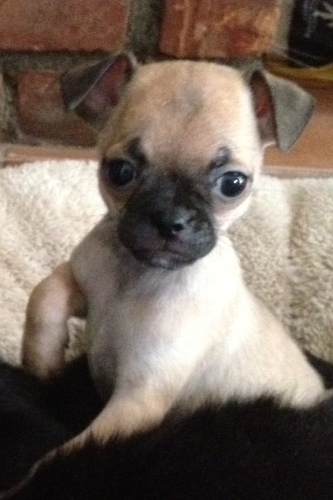
Meet Billie.

My daughter was getting a puppy, she announced over dinner the other night, a chug — a winsome mix of chihuahua and pug. She produced a picture; we oohed and aahhed over its black-brown cuteness, studying it from all angles, suggesting names. Prudence? Dahlia? Stella? No, she said. Every dog in Brooklyn is named Stella. She would know what to name it once she picked her up.

Names are so personal — the names we choose for our children, our pets, the characters in our stories. Who knows where they come from? Some people, even some authors, I imagine, collect names like coins or seashells, zealously guarding them for a rainy day. Some names pop into our heads, others we blatantly steal from real life. I once ripped a page out of my niece’s First Holy Communion program because some of the names seemed destined for a page in a future story.

Names take on a particular urgency during pregnancy, second in importance only to your due date. When I was expecting my second daughter, it seemed that all my friends were pregnant, or trying to be. We did not have the guidance of the mommy bloggers back then; we only had each other. I called my best friend to share the news. We both had daughters; I knew she wanted a second child.

“Congratulations,” she said, then added warily, “Got any names picked out?”

“Yes,” I said, certain mine was an original. “Nora.”

My friend gasped. “You can’t,” she cried. “That’s my name.”

“Really? Are you pregnant, too?” I was ready to duke it out with her, compare conception dates if necessary, if that’s what it took to claim the moniker for my unborn child.

“No, but I’ve had that name picked out for a long time.”

Great minds think alike? Perhaps. I claimed the name came to me as pure inspiration. But we both were avid viewers at the time of “One Life to Live,” a soap opera featuring a feisty fictional character named Nora Gannon, played by Hillary B. Smith. Nora was an attorney who endured it all: a brain tumor, train wreck, multiple marriages. It was your typical soap stuff, but Nora Gannon always came back fighting.

I gave birth first, which ended the argument. And happily, my friend had her second daughter a year later. And did not name her Nora. And only a year ago, I learned that one of the 18 siblings of my late grandmother had been named Nora, a twin who died in her first year. This discovery that further endeared the name to me.

All this to say that the same sensitivities apply, I believe, when we name the characters in our stories.
Once we give our characters a name and a voice on paper, it’s not unlike the onset of a pregnancy. We may wait a while before socializing the information, eventually share it with a few close friends. But until the birth announcement (i.e. publication), it can be disconcerting to see a character’s name jump out at you from somewhere other than your own page.

This has happened to me twice in the last few weeks. First, nearing the end of a current best seller, a secondary character reveals something about herself that involves the name of a main character in my novel, DELIVER HER.

No, I cried to myself, to the author. How can this be? Everyone will think I stole it.

Then, a couple of days later, a minor celebrity gave birth, giving her son the name of another of my characters. Foul! I call again.

(Notice that even now I am not sharing the names of my characters.)

Once I’m calm, I remind myself that few if any future readers will make this connection. And even if they did, would it matter? Hopefully the story I weave around my characters will give them their own identity.

Like a wise woman once told me when we were struggling with infertility the first time around, when the news of every pregnancy inflicted physical pain: “Remember, they’re not having your baby,” she said.

She was right then, and now. My novel is my baby, and no one, no matter what they’re named, can take that away from me.

When Faith Is Tested

Wildwood, early 1960s

I’m a creature of habit. On summer Sundays, I like nothing better than to pedal to the Inlet and take an early morning beach yoga class. To our right, charter fishing boats head out for the day’s catch. One of the boats plays “Taps.”

In front of us, surfers claim the day’s first waves for themselves, bobbing on their boards in a watery coffee klatsch.

The light is still soft, and families with very young children arrive at that hour. It takes me back to that precious time when my two daughters were small, and even further to my own childhood, when we rented a beachfront bungalow here for a couple of weeks.

At the end of a sandy shavasana, I reward myself with a cup of coffee from Carlson’s Corner and settle back on the beach with the Styles section from the New York Times. I save “Vows” for last. I do skim the wedding announcements, but I have to say, if your story isn’t interesting enough for Vows, I don’t really care how and where you met. That’s my pet peeve.

Anyway, when I began reading the July 22 Vows, I was dismayed to see it told in the first person, by the father of the bride. I almost didn’t read it. Then I did. It is two stories, maybe three: the love story of Bridget Kelly and Eric Strauss for sure, but also the story of a father’s love for a daughter, who suffered a terrible trauma and triumphed.

It was written by Michael Kelly, a columnist for The Omaha World-Herald, for which he has chronicled the attack on his daughter Bridget and her recovery over the last 10 years.

It is a straightforward accounting that left me in tears. I share it with you here.

One Day You Will…

Run a marathon. Own your own business. Quit your job and sail for a year. Write a novel.

Yeah, about that last one. Based on the push I got the other night, I’m about to do this. The thought is at once scary and exhilarating, especially since I’m working toward a completion date of December 31, 2012. (Hence the countdown on the bottom right of this blog.) So even as I post these few words here, I’m feeling guilty for not adding to the day’s thousand words (Stephen King’s advice to aspiring writers).

Running on the Spring Lake boardwalk on Saturday, I was behind a tee-shirt read ONE DAY YOU WILL. Just like that, in big block letters. I liked the infinite possibility of it: fill in the blank with your dream or goal. It struck me that this is my “one day,” so why not adopt this as my motto? And while I’m at it, it’s a great name for my blog.

So I was not even a little let down to learn that “One Day You Will” is the tagline for Glenfiddich’s new “Explorers” ad campaign. Because what are writers if not explorers…of the imagination, of the what-if’s, of the infinite power of words?

What will you find at ONE DAY YOU WILL? I’ll use this space to chronicle the “Transported” trip and share great bits of writing, visual inspirations a la Susan Breen’s “image diary” exercise (always done at the last minute but from which was borne this book idea), and tips about the creative process from authors whose work I respect. Thanks for reading and sharing!

Transported

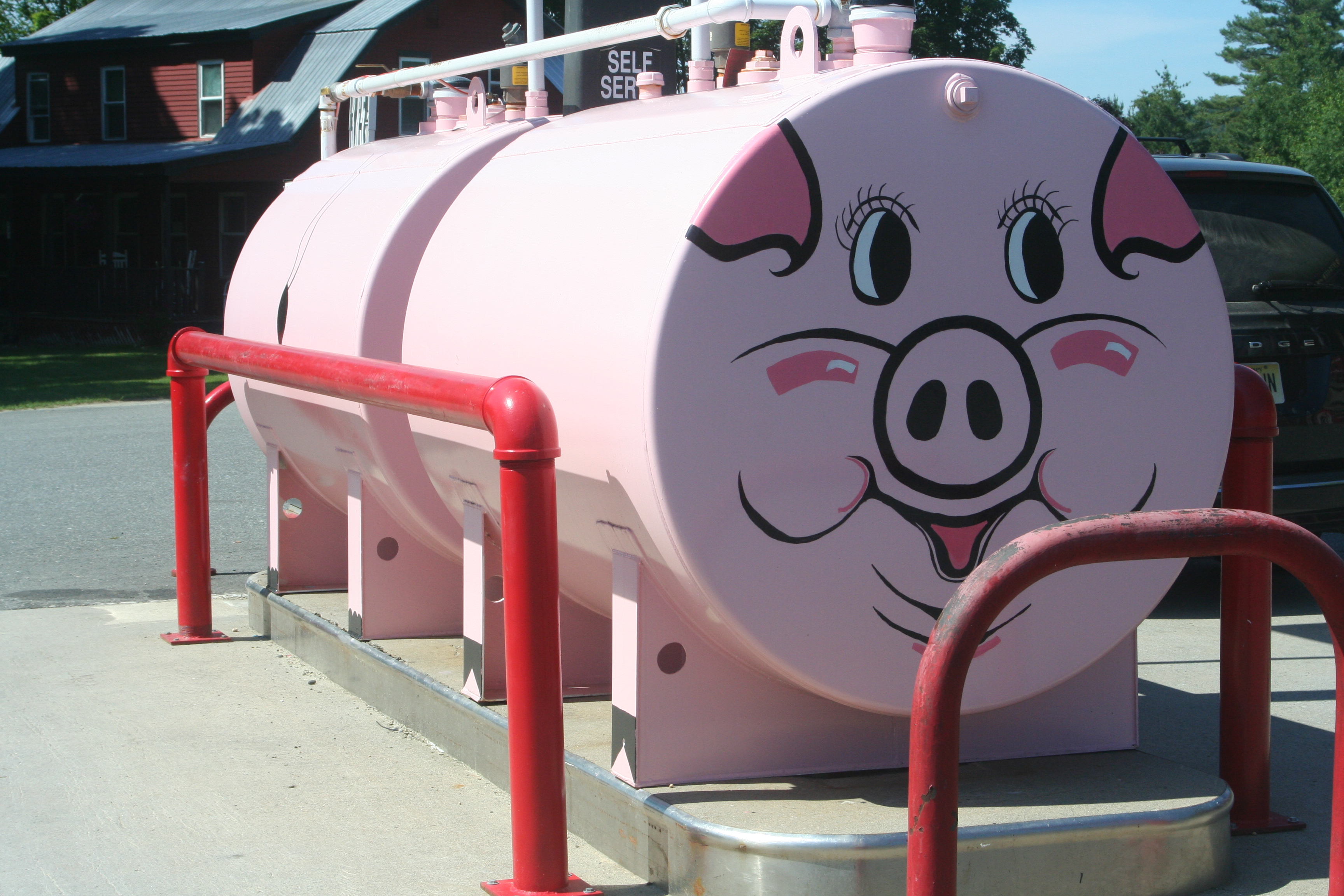
The journey began here.

Three months ago, we stopped for a late afternoon sandwich at the Swiftwater Canyon General Store en route to the Kancamagus Highway. Today, these pretty pink pigs, which dispense gas in front of Swiftwater, are going to fuel me for the next five months while I do my best to churn out “Transported,” my debut novel.

My thanks to The Book Doctors, Arielle Eckstut and David Henry Sterry, for their words of encouragement last night at Pitchapalooza, sponsored by Booktowne of Manasquan. They deemed my pitch worthy of a connection with a literary agent once I complete a draft. I need no more encouragement than that!

I am also grateful to Maribeth Pelly, friend and marketeer extraordinaire, for bringing Pitchapalooza to town. And most of all, to my husband and faithful reader, Maurice. Hold on, baby…you thought 20 pages was a lot?

Check this space often for mileposts from this journey.